What Is the Best Ring Options for a Large House
Diamonds, Settings, Rings and Band Types
RINGS & BANDS
It'southward helpful to starting time with the jewelry basics of rings and bands. This portion of the guide covers the standard parts of all rings, including settings, shanks, and gallery styles.
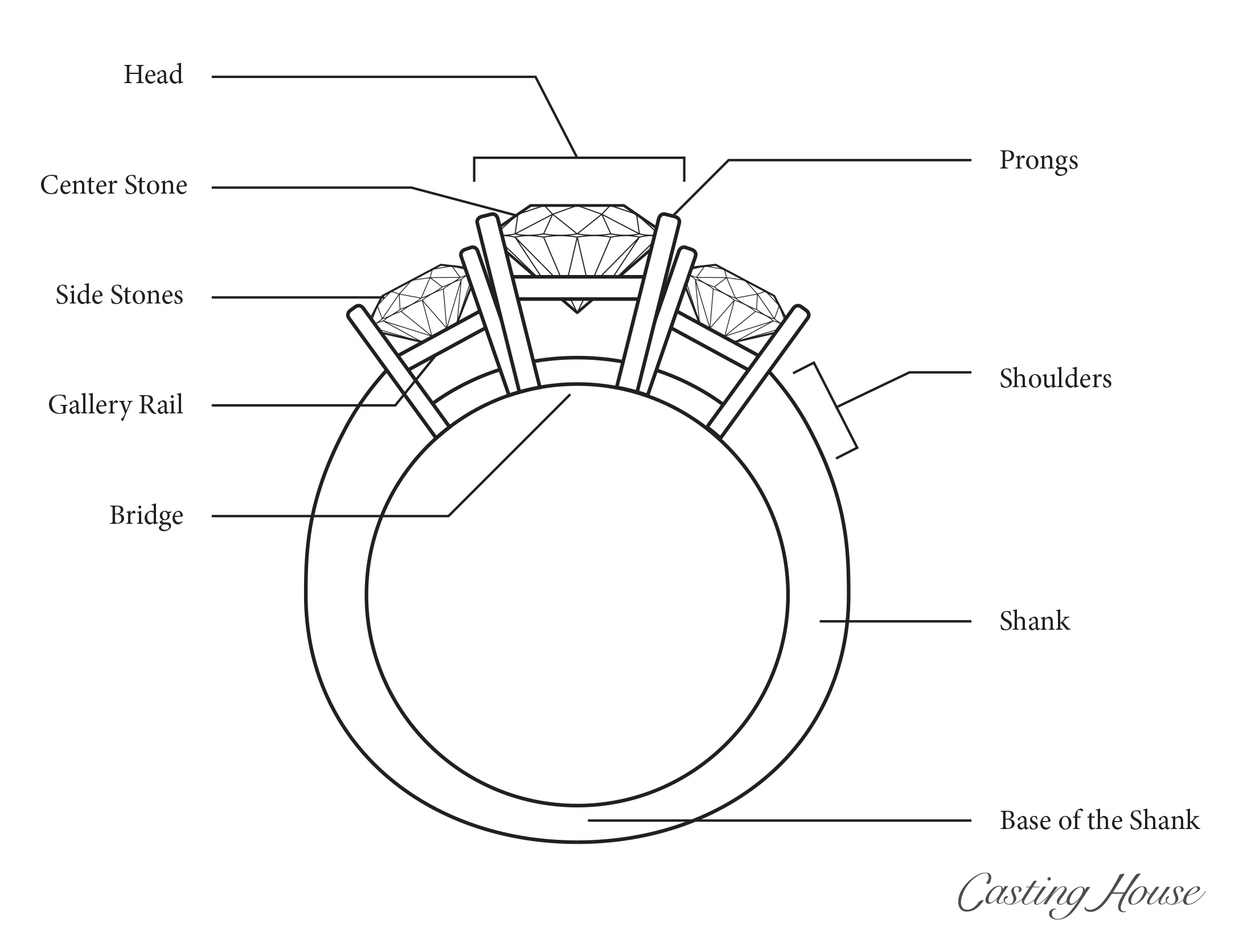
Looking at the ring from a side view and starting at the top, many rings feature a center stone setting held by a setting often referred to as the 'head' of the ring. The center stone, which could be diamonds or any other type of gemstone, may be accompanied past side stones. All are held into the setting with metal prongs that gently yet securely hold precious diamonds and gemstones. In that location are diverse types of prongs and other setting styles that are also used to hold stones, such as bezels (see Center Settings).
The diamonds or gemstones pictured here are set with prongs and take a gallery rail that helps go on the prongs secure, located about midway from the top of the rock to the ring rail, or bridge. The base of the shank is opposite the heart rock - or head of the ring - and as the shank leads up into the top of the ring and its settings, it may change depth or width and be referred to as 'shoulders'. Depending on the pattern of the ring, the shoulder area may taper, widen, split, cathedral, or have on a number of different shapes.
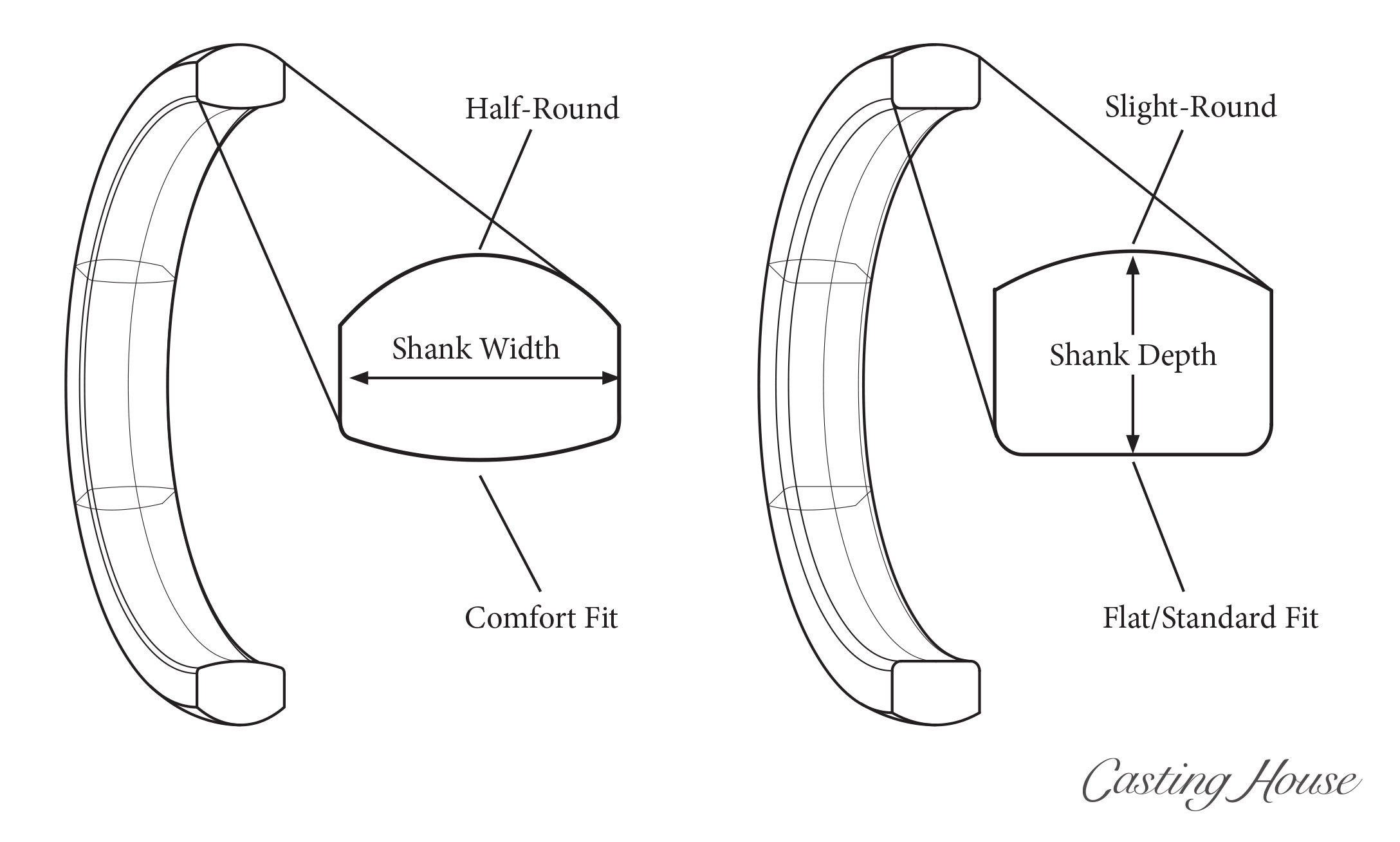
The ring shank will feature an outside shape or profile, which is the superlative of the shank, opposite the band rails. Two pop band profiles are one-half-round and slight-round. The inside of the ring along the finger is generally either designed to have a curved comfort fit or straighter flat fit, also known equally a standard fit.
When working with your Casting House representative, be sure to discuss the desired shank depth and width as well every bit the profile and inside fit.
ANATOMY OF A RING
Looking at the band from a side view and starting at the acme, many rings feature a center stone setting held by a setting ofttimes referred to as the 'head' of the band. The center stone, which could be diamonds or any other type of gemstone, may be accompanied by side stones. All are held into the setting with metal prongs that gently yet securely hold precious diamonds and gemstones. At that place are various types of prongs and other setting styles that are also used to hold stones, such as bezels (run into Center Settings).
The diamonds or gemstones pictured here are set up with prongs and take a gallery rail that helps keep the prongs secure, located near midway from the top of the stone to the ring rail, or bridge. The base of the shank is opposite the center stone - or caput of the ring - and as the shank leads up into the tiptop of the ring and its settings, information technology may alter depth or width and be referred to every bit 'shoulders'. Depending on the design of the band, the shoulder area may taper, widen, divide, cathedral, or take on a number of different shapes.
The ring shank will feature an exterior shape or profile, which is the top of the shank, opposite the ring rail. Ii popular ring profiles are half-circular and slight-round. The inside of the ring forth the finger is generally either designed to accept a curved comfort fit or straighter flat fit, as well known as a standard fit.
When working with your Casting House representative, be certain to discuss the desired shank depth and width also as the profile and inside fit.
SHANK DESIGNS
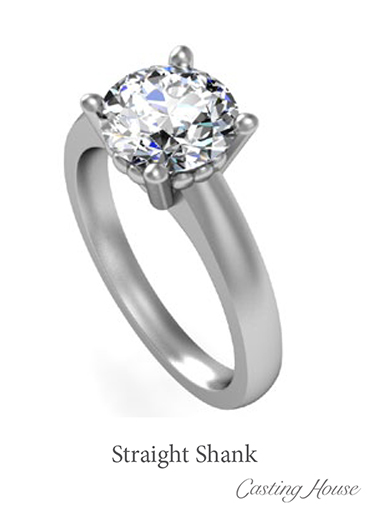
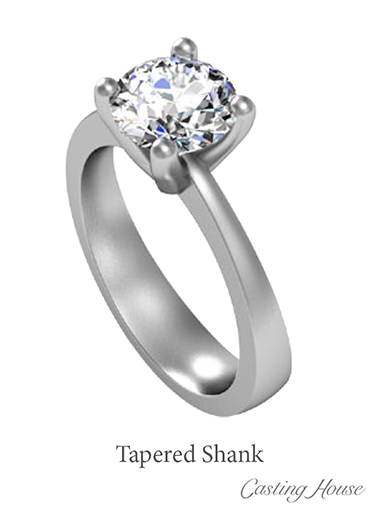
There are many popular shank designs, from simple and traditional to artistic and unusual. Ring shank designs will vary based on shape, width, and depth and include straight shank, tapered shank, knife-edge shank, bypass shank, split shank, pinched shank, cathedral, and Euro shank.
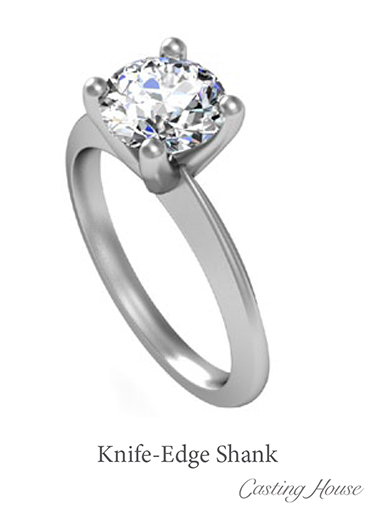
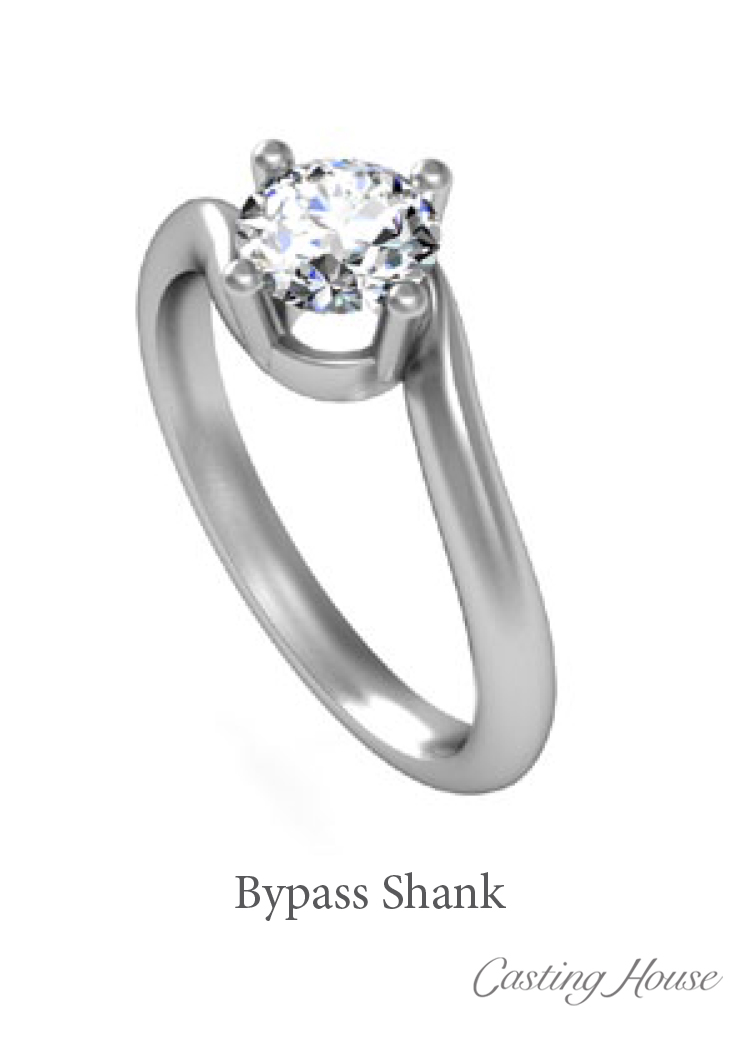
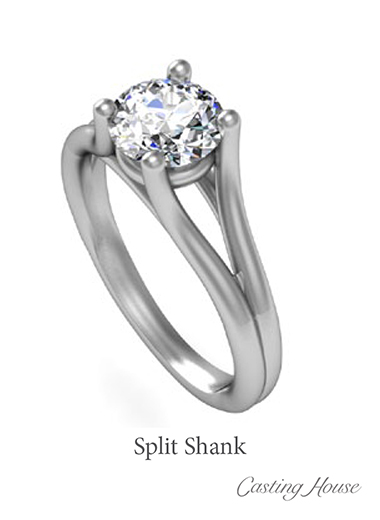
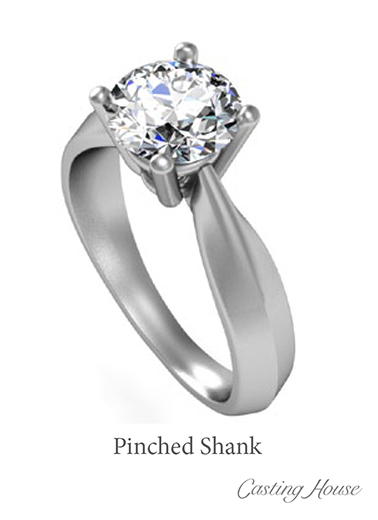
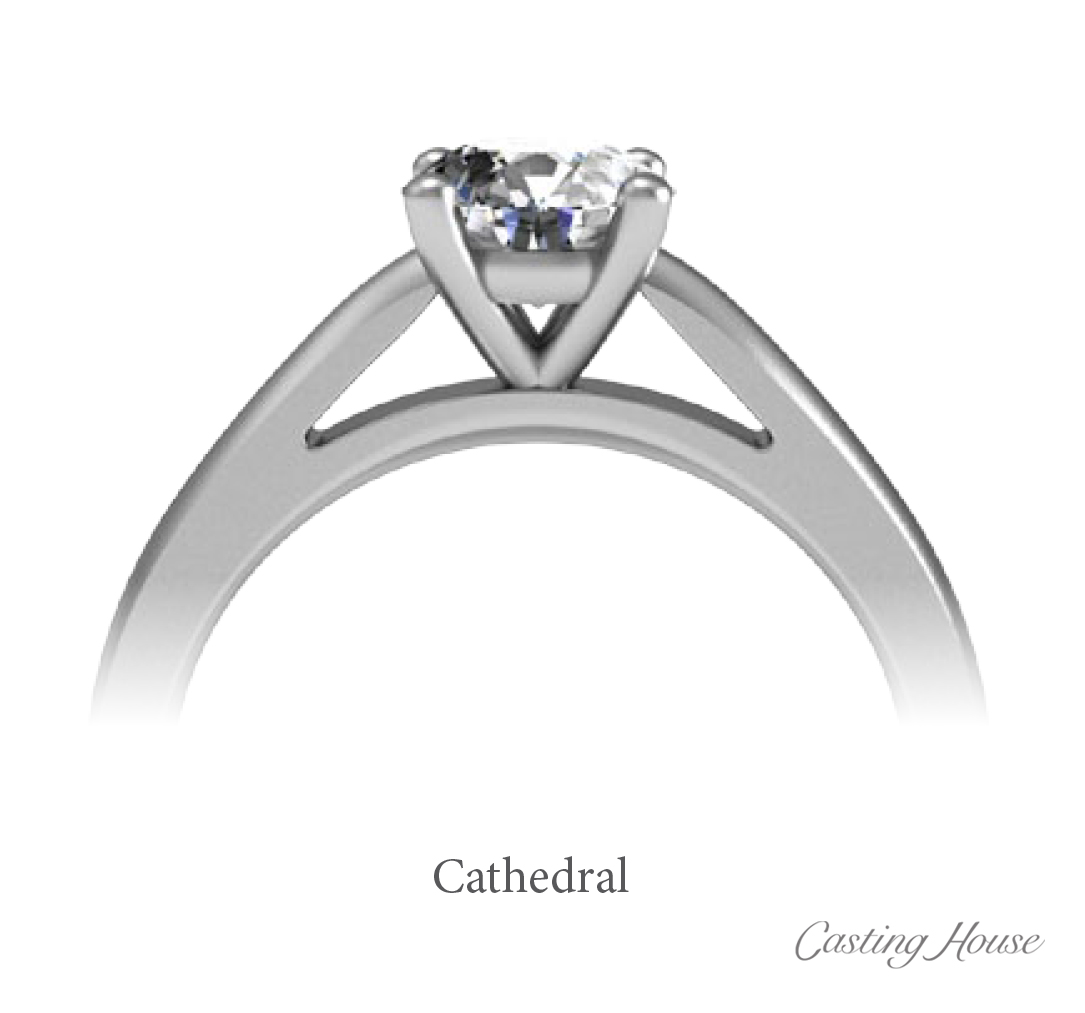
A cathedral – or open up cathedral – mode is where in that location is negative space in the shoulders of the ring, leading up to the middle setting.
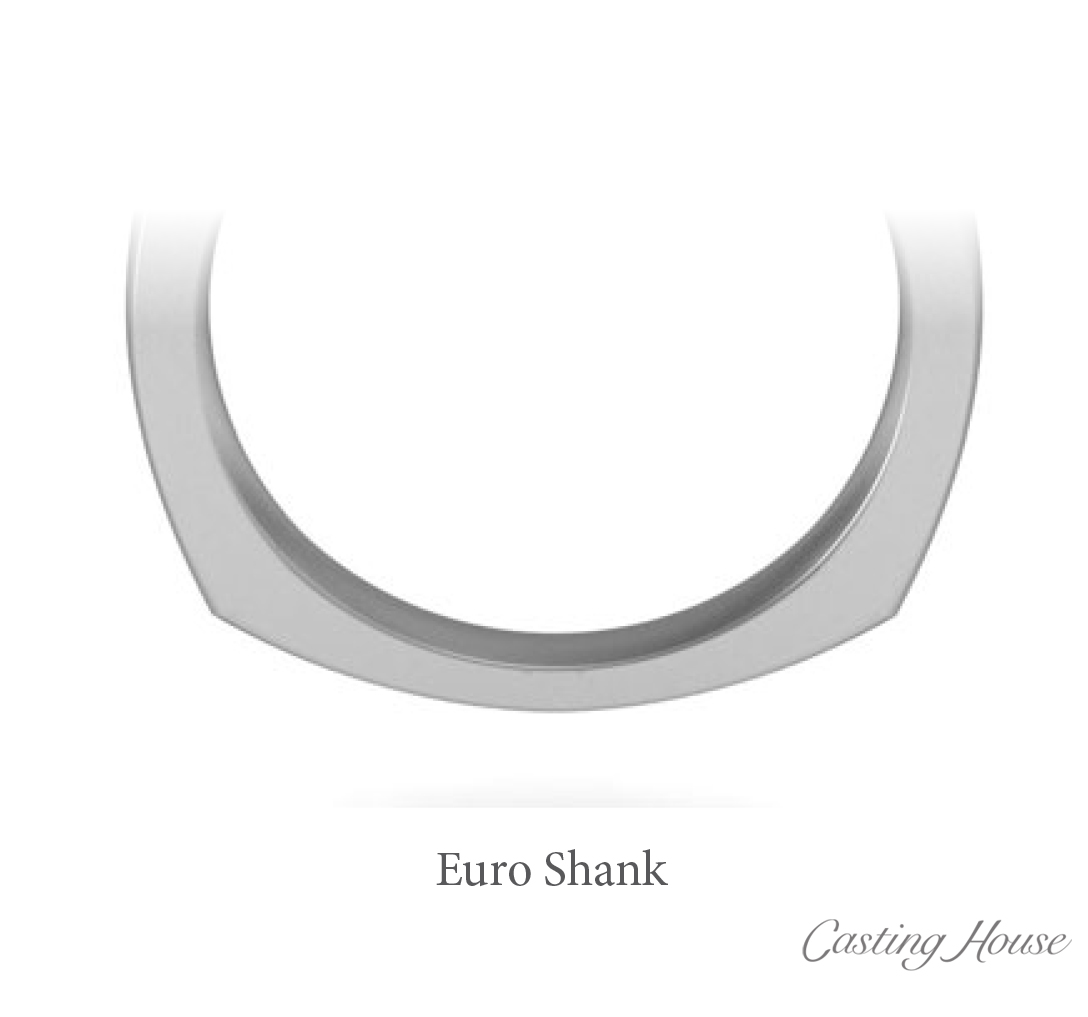
Euro shank designs are role of the bottom of the ring, opposite the center setting. Here the shank is slightly flattened.
WEDDING BANDS
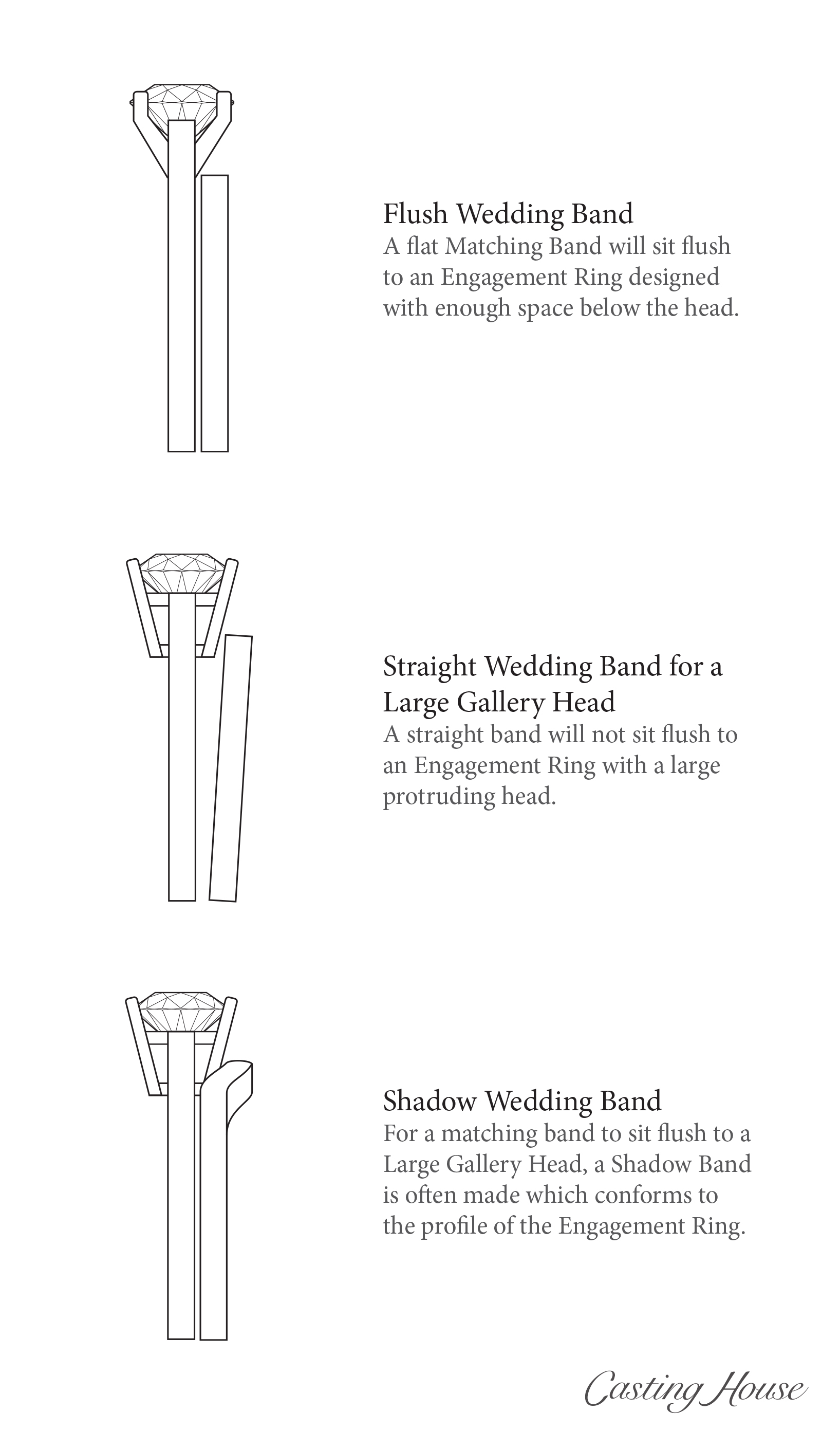
When designing an appointment ring and wedding ceremony ring combination, it's important to consider how your client would similar the 2 rings to fit next to each other. Most nuptials bands will fit side by side to an engagement ring in one of three ways:
• Flush:
A apartment matching band will sit flush to an engagement band designed with enough space beneath the head, between the finger rail and the setting.
• Straight, with a large or low center setting:
A straight band volition not sit flush to an appointment ring with a large protruding caput or a low center setting
• Shadow:
For a matching band to sit affluent to a large or low gallery head, a shadow ring is often made to conform to the profile of the engagement ring. Also works well next to engagement rings with unusual center setting designs, such every bit bypass.
DIAMOND MELEE GENERAL REFERENCE
Diamond and gemstone melee is used in many Conjugal designs and custom jewelry designs to add together sparkle and interest. Melee tin can be used in rings, earrings, necklaces, bracelets, and almost any other jewelry imaginable. While there are many variations on diamond melee setting styles, it's important for everyone in the design process to use the same terms in order to achieve the intended result.
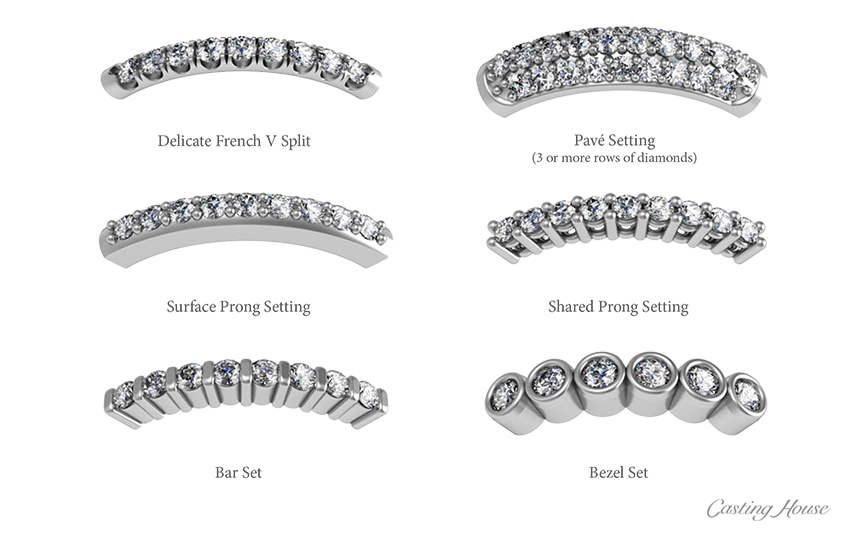
Diamond melee setting options (pictured below, from top left)
- Delicate French V-Split setting: this setting mode is made with delicately split prongs that course a scalloped-shape when viewed from the side
- Pave setting: a dramatic setting that is created using shared prongs and three or more rows of expertly placed diamond melee
- Surface prong setting: in this setting style, pocket-size shared prongs are raised slightly in a higher place the surface of the metal and tiny cuts are made for the melee culets
- Shared prong settings: a versatile style, typically also suitable for larger gemstones also, featuring either opened or closed galleries
- Bar setting: an elegant setting style that uses small cuts in metallic 'bars' on either side of the diamond melee to hold in place
- Bezel setting: a clean-looking way that encircles the diamond melee with a tiny rim of precious metal
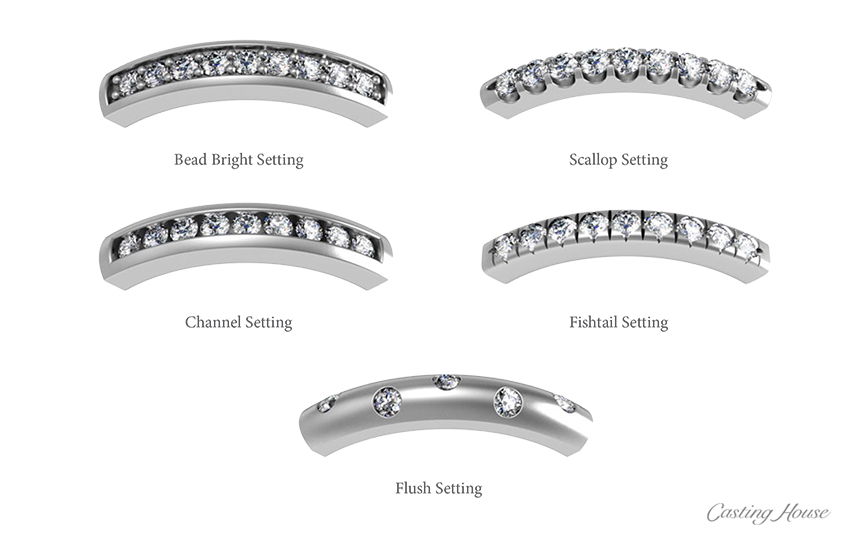
(pictured below, from top left)
- Bead vivid setting: this is a very popular and versatile setting way, with shared prongs and usually a slightly askew side wall
- Scallop setting: another favorite setting style, these are fragile shared prongs that form a scalloped-shape when viewed from the side
- Channel setting: a classic and make clean-looking setting fashion where the melee is ready between recessed metallic walls, without prongs
- Fishtail setting: an elegant setting where the diamond melee is fix low into the metal with delicate fishtail-shaped cuts
- Flush setting: a sleek setting style in which diamond melee is set individually, directly into the metallic and without prongs
Source: https://www.castinghouse.com/jewelry-manufacturing/diamonds-and-setting.html
0 Response to "What Is the Best Ring Options for a Large House"
Enregistrer un commentaire